If you live in Kenner or New Orleans and you have noticed your windows looking cloudy, gritty, or hard to see through no matter how often you wipe them down, you are not imagining it. Salt air window damage is a real and well-documented problem for homes along the Gulf Coast, and it moves faster than most homeowners expect.
This article is for coastal homeowners in the Kenner and New Orleans area whose windows need some help, and who want to understand what is actually happening to their glass and frames, what warning signs to watch for, and how often windows in this climate need to be cleaned to avoid permanent damage. Understanding this matters because a window that would last decades inland can develop etching, corrosion, and hardware failure in a fraction of that time here, and catching the problem early is far cheaper than replacing the window.
How Salt Air Damages Windows
Southeast Louisiana sits close enough to the Gulf that prevailing winds regularly carry fine salt particles inland and deposit them on exterior surfaces, including glass, frames, screens, and hardware. Rinsing those exterior surfaces on a regular schedule is the single easiest way to slow down salt air window damage. Every time the wind blows off the water, a small amount of sodium chloride lands on your house, and over weeks and months it builds up.
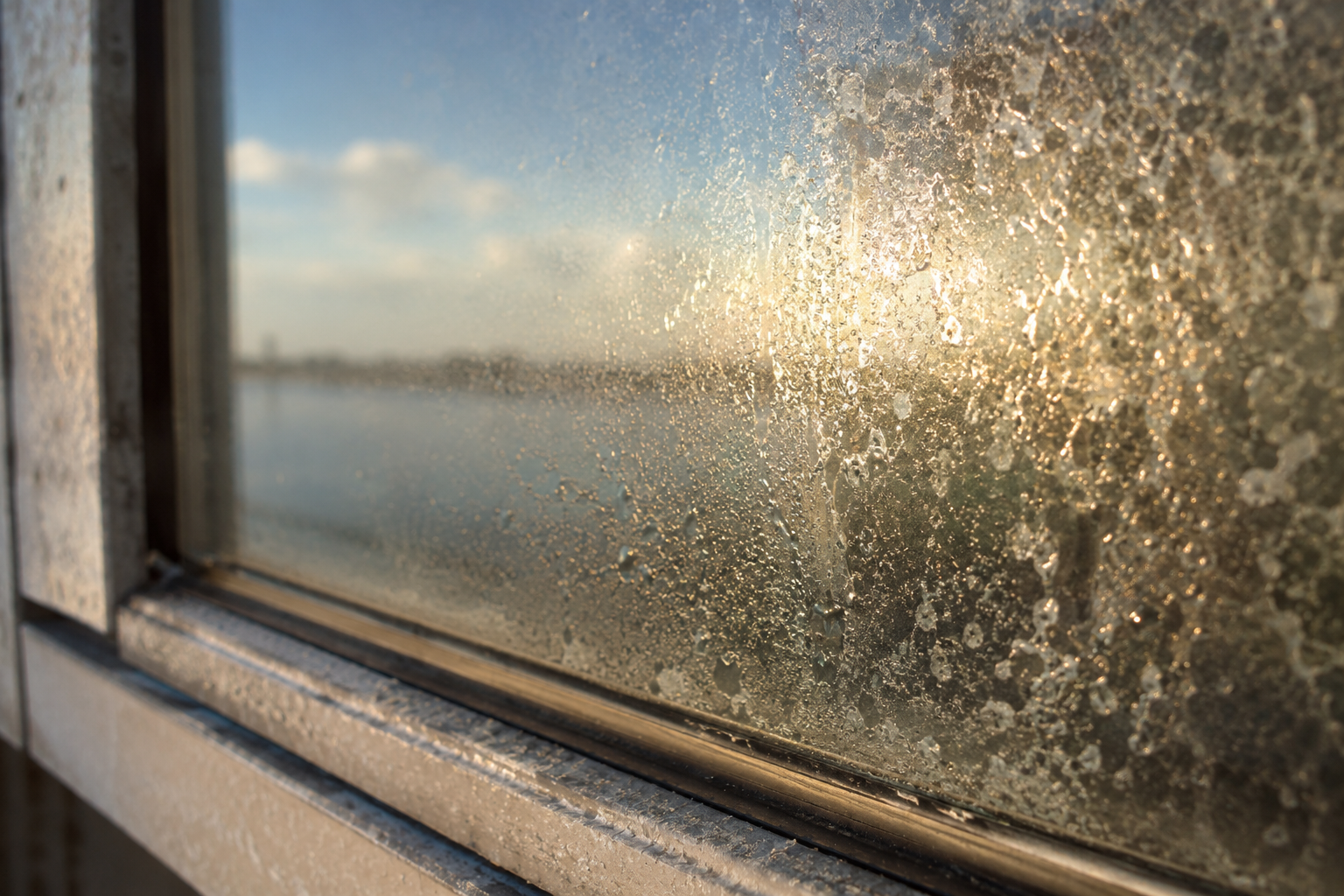
On glass surfaces, salt deposits behave almost like sandpaper at a microscopic level. As the crystals sit on the pane and are ground in slightly by wind, rain, and normal weather, they can create tiny pits in the surface of the glass. Those pits scatter light and trap heat instead of letting it pass through cleanly, which is why older, unwashed coastal windows often develop a permanent hazy appearance that no amount of glass cleaner will fully remove. Salt crystals can permanently pit glass if not cleaned regularly, and once that etching happens, it cannot be polished away like ordinary dirt.
Metal window frames, tracks, and hardware take an even harder hit. Aluminum frames corrode when chlorides penetrate their protective oxide layer, and the result is often a chalky white residue commonly called white rust. Salt air exposure leads to pitting and oxidation of aluminum and degradation of coatings over time, and hardware failure can occur due to rust from salt and moisture exposure, which is why locks, hinges, and rollers on coastal homes tend to stick or seize up years before they would inland.
Why Salt Attracts Moisture and Makes Corrosion Worse
Salt does not just sit on your windows looking dirty. Salt acts as a desiccant, attracting ambient humidity to window surfaces, which means a light dusting of salt actually pulls water vapor out of the air and holds it against the glass and frame. That combination of salt and moisture is far more destructive than either one alone. Salt air attracts moisture, worsening corrosion over time, and in a humid climate like ours, that moisture rarely gets a chance to fully dry off before the next round of salt-laden wind rolls in.
This is one reason coastal homeowners see corrosion and etching happen so much faster here than in drier inland regions. According to National Weather Service climate data, relative humidity along the Louisiana coast stays elevated for a large part of the year, and that relative humidity combined with salt particles creates near-constant surface moisture on exterior surfaces. Salt air damages windows by depositing chlorides that attract moisture, and once that moisture is sitting on aluminum or steel hardware, corrosion can begin within days rather than months. Excess humidity in the air only speeds that process along.
Window Condensation: The Indoor Half of the Problem
Salt is the outdoor threat, but window condensation is the indoor one, and in a humid climate the two problems often show up together. Condensation occurs when warm air meets cold glass surfaces, and it is a simple process of physics: warm, moisture-laden air holds more water vapor than cold air, so when warm inside air touches a cooler window, the air near the glass cools rapidly and releases that extra moisture as water droplets on the glass surface.
High humidity is a fact of life in New Orleans and Kenner, and this shows up constantly during the transition seasons, when the air conditioner keeps interior glass cooler than the humid outside air, and again in a cold Louisiana winter, when cold air outside chills the glass while warm, moisture-heavy inside air presses against it. High indoor humidity makes this worse, and excess humidity indoors is one of the most common causes of window condensation in Louisiana homes. Indoor humidity levels above 50% can cause condensation, and modern double-paned windows typically allow around 37% indoor humidity before condensation starts to form on the inside glass, which is a helpful benchmark if you are trying to figure out whether your home’s humidity is a contributing factor.
A certain amount of humidity is normal in any Louisiana house, especially with cooking, showers, and stale air drawn in from outside, but excessive humidity indoors becomes a problem fast. Excess humidity can damage window sills and wood framing, warping wood and softening the material around the glass over time. Indoor moisture also tends to collect in window tracks, where it combines with dust and salt residue to form a gritty paste that keeps hardware from sliding smoothly.
It is worth noting that dry air from your AC is generally your friend here. Keeping indoor air at a moderate humidity level, rather than letting stale inside air build up, reduces how much water vapor is available to condense on the glass in the first place. Homeowners who run a dehumidifier or keep their AC set to a consistent temperature tend to see far less indoor condensation than those who let indoor humidity and temperature swing widely between cooler air-conditioned days and warm, humid stretches with the system off.
Condensation is more likely in climates with January temperatures below 35°F, and while New Orleans winter weather is mild compared to much of the country, cold snaps do bring exactly the kind of sharp temperature difference between outside air and warm inside air that triggers heavy condensation on glass.
Why Window Materials Matter in a Coastal Climate
Not all window materials hold up the same way against salt and humidity. Aluminum frame materials are common in Louisiana homes because they are affordable and lightweight, but bare aluminum is one of the more vulnerable materials when it comes to chloride exposure. Vinyl framing materials generally resist corrosion better than untreated metal, though vinyl materials can still trap moisture and salt residue in their tracks and weep holes. Wood window materials look great and perform well when properly sealed, but wood is one of the more porous materials used in construction and will absorb both moisture and salt if the finish is allowed to fail.
Marine-grade aluminum and coated composite materials have become popular replacement materials for coastal homes because manufacturers engineer these materials specifically to resist salt and humidity damage. Whatever materials your current windows are built from, understanding how those materials respond to salt air helps you know how often to clean and inspect them, and what to ask for when it is time to replace a window.
Warning Signs Your Windows Are Being Damaged
A few signs tend to show up in a predictable order as salt air and humidity take their toll on windows:
- Cloudy or etched glass that will not come clean no matter how much you wash it, especially glass surfaces facing the water or open to prevailing coastal winds.
- A chalky white residue or pitting on aluminum frames, which usually signals corrosion has already started beneath the surface.
- Stiff, sticky, or corroded hardware, including locks, latches, and rollers in the tracks that used to move smoothly.
- Discoloration, cracking, or gaps around seals and weatherstripping, which lets in both salt-laden outside air and additional moisture.
- Soft or discolored wood framing near the glass, which often points to excess moisture that has been sitting against the wood for months.
If you notice mold or mildew forming in window tracks or along interior sills, that is usually a sign that both salt buildup and indoor humidity have been left unaddressed for a while, since mildew thrives wherever moisture and organic material, like dust or wood, sit together undisturbed.
How Often Coastal Homes in Kenner and New Orleans Should Clean Their Windows
Regular cleaning is essential to prevent permanent glass damage, and how often “regular” needs to be depends heavily on how exposed your house is to salt air. As a general rule, rinsing should be done every 2 to 4 weeks to remove salt deposits from exterior glass and frames before they have a chance to etch the surface. Homes directly on the waterfront, or exposed to strong prevailing winds off the water, need monthly cleaning at minimum, since salt accumulates faster there than on homes set back from open water.
For most homes in Kenner and New Orleans that are close enough to the coast to notice a salty smell in the air after a storm, a full professional window wash every 4 to 8 weeks, paired with a quick rinse of the frames in between, is generally enough to prevent the kind of buildup that leads to permanent hazy glass or frame corrosion. Homeowners further inland can usually stretch that out, but should still watch for the warning signs above, since coastal wind can carry salt further than people expect during storms and high-wind events.
Regular rinsing can prevent salt buildup on windows and hardware, and it is a lot cheaper than replacing corroded frames or etched glass down the road. If it has been longer than a couple of months since your windows were last cleaned, especially the exterior glass and tracks, that is a good sign it’s time.
If you would rather not manage the schedule yourself, feel free to reach out and contact our team. Vivid Window Cleaning offers window cleaning in Kenner and New Orleans and can set up a recurring cleaning plan matched to how exposed your home or building is to salt air, which is a common request from homeowners along the lakefront and river parishes.
How Professionals Handle Coastal Window Cleaning
Professional cleaning can remove salt without scratching glass, which matters because salt crystals are abrasive and scrubbing them with the wrong tools or technique can grind those tiny pits into the glass rather than removing them. Soft washing is the standard approach for cleaning windows in coastal areas, using specialized low-pressure equipment and cleaning solutions designed to lift salt and mineral deposits off both glass and frames without scratching the surface. Learn more about our residential window cleaning services and commercial window cleaning services.
A thorough cleaning also covers frame tracks and hardware, not just the panes, since salt and grime that build up in the tracks are what eventually cause locks and rollers to stick or corrode. Contact a local window cleaning company that understands coastal conditions if you are not confident doing this yourself, particularly for second-story windows or commercial storefront glass, where safety and equipment become bigger factors.
Keeping Glass and Frames Clean Between Visits
A clean window does more than look good. Clean glass lets more natural light into the house, and clean, well-maintained frames simply last longer than neglected ones. Most homeowners find that a quick wash of the glass and a rinse of the frames between professional visits is enough to keep everything looking clean and to keep salt from building back up. If your windows are due for a wash and you are not sure where to start, a soft wash with plain water is a safe first step before anything more thorough, and our post on the best temperature to wash outside windows covers the timing details.
How to Protect Your Windows Between Cleanings
A few habits go a long way toward slowing down salt air window damage between professional visits:
- Rinse exterior frames and glass with a hose or fresh water regularly, especially after storms or extended periods of onshore wind, to keep salt from sitting on the surface long enough to etch it.
- Inspect window hardware for wear every few months, checking that locks, hinges, and rollers move freely and lubricating moving parts with silicone to prevent rust and keep windows operable.
- Check seals and caulking regularly, since cracked seals let in both salt air and extra humidity, and salt moisture accelerates corrosion on metal while it degrades rubber seals and weatherstripping over time.
- Keep weep holes clear. Clear weep holes are essential to prevent water pooling that speeds frame deterioration, since standing water trapped in the frame combines the worst effects of both moisture and salt exposure.
Salt and humidity affect exterior surfaces across the whole house, not just the glass, which is why frames and hardware deserve just as much attention. Consider marine-grade materials when replacing hardware or windows. Using marine-grade coatings can protect metal frames from corrosion, and replacing with marine-grade materials increases window life in coastal areas. When replacing windows, consider better seal systems for enhanced salt resistance, since newer seal designs hold up considerably better against combined salt and humidity exposure than older hardware.
Manage indoor humidity levels with your AC or a dehumidifier, since lower indoor humidity means less condensation forming on the inside glass, which protects wood sills and framing from excess moisture damage.
Windows, Energy Efficiency, and Curb Appeal
Clean, well-sealed windows are not just about appearance, although hazy, salt-etched glass does hurt a home’s curb appeal considerably, especially on street-facing windows that are the first thing visitors and buyers notice. Cracked or degraded seals let conditioned air leak out and warm, humid outside air leak in, forcing your air conditioner to work harder and use more fuel to keep the house comfortable. A cracked seal also lets in extra heat during a Louisiana summer and lets conditioned indoor air escape, forcing the AC to generate more cooling to make up the difference.
Maintaining seals and frames supports energy efficiency and helps with saving fuel over a long, hot Louisiana summer, on top of protecting the glass and structure of the window itself. Even a single failed seal can make a noticeable difference in how much heat gets into a room, and replacing that seal is far cheaper than the extra fuel spent working around it. According to the ENERGY STAR program, well-sealed, well-maintained windows are one of the simplest ways homeowners can cut wasted heating and cooling costs.
When windows do eventually need replacing, choosing new windows built with coastal conditions in mind, including marine-grade frames and stronger seal systems, is worth the investment for any Kenner or New Orleans homeowner who wants the replacement to actually outlast the last set. Since Gulf Coast weather also means hurricane season, it is worth reading our guide on how to protect your windows against hurricanes so your windows are covered from every angle, not just salt and humidity.
The Bottom Line
Salt and humidity are a combination that ages windows faster in Kenner and New Orleans than almost anywhere else in the country outside of a handful of other coastal regions. Salt air accelerates degradation of glass if not washed regularly, and paired with the region’s consistently high humidity, that process moves even faster than it would in a drier coastal climate.
Watching for the early warning signs, rinsing frames and glass on a regular schedule, and managing indoor humidity are the three biggest things any homeowner can do to protect their investment. Left unaddressed, salt and humidity can lead to permanent glass damage, lead to frame corrosion that spreads to the rest of the structure, and eventually lead to costly window replacement.
If your windows are already showing hazy glass, white residue on the frames, or hardware that has started to stick, Vivid Window Cleaning serves homeowners and businesses throughout Kenner and New Orleans and can get your windows back to clear, and on a maintenance schedule that keeps them that way.