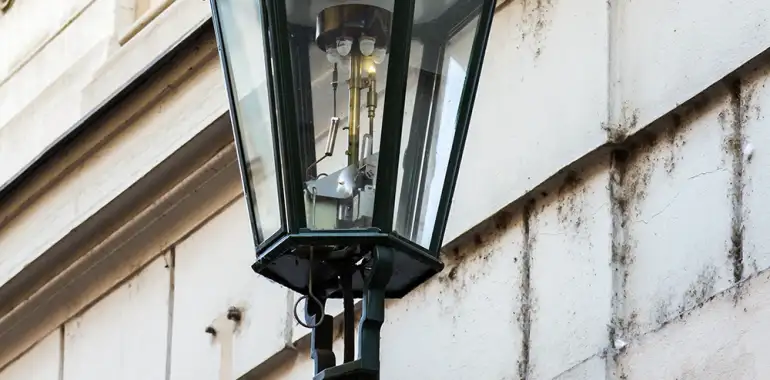
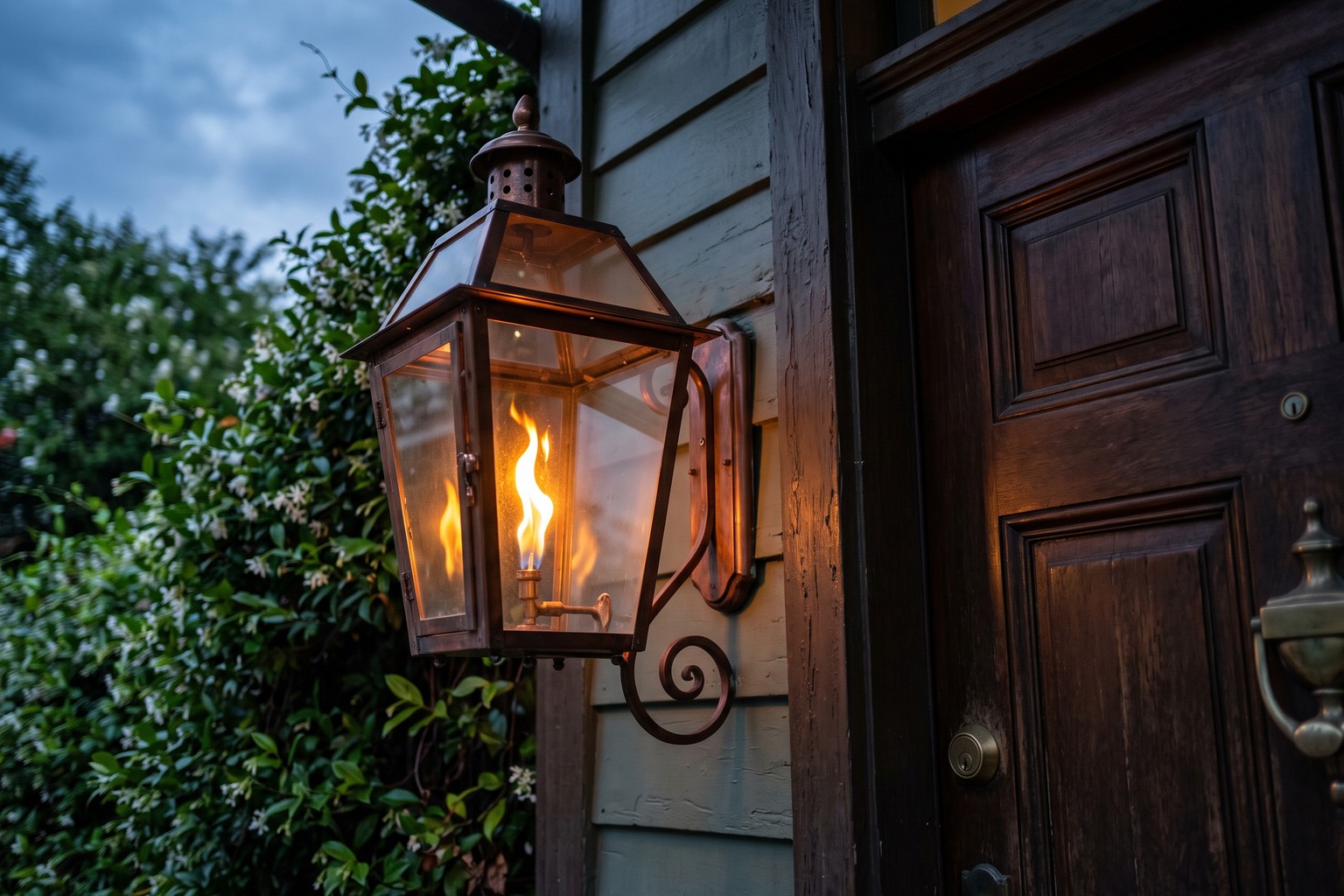
Gas lanterns are one of those details that create instant timeless elegance on a New Orleans home — mounted on a wall by the front door, hanging from a post at the end of the walk, or flanking a porch with that warm, flickering glow nothing electric quite replicates. But a gas lantern that looked amazing the day it was installed can start to look dull, sooty, or tired within a year or two if it’s left alone. The good news is that keeping gas lanterns looking their best doesn’t take much — a little regular cleaning, a few safety checks, and knowing what to look for before a small issue turns into a bigger one.
Where Gas Lanterns Show Up Around a Home
Gas lanterns and gas lamps come in more styles and mounting spots than most people realize. Wall-mounted gas lanterns flanking a front door are the most common sight in New Orleans neighborhoods, but hanging lanterns suspended from a porch ceiling, and post-mounted lamps set a few feet off the ground at the end of a walkway, are just as popular. Some New Orleans homes even carry a gas light into an interior courtyard, effectively bringing that same warm gas light indoor for a covered outdoor room, alongside the more traditional exterior gas lanterns on the house itself.
Older gas lamp fixtures sometimes get retrofitted with light bulbs instead of an open flame for homeowners who want the look of a gas light without an active flame to maintain — worth knowing if you’re deciding between a true gas flame and an electric look-alike when you’re shopping for a new fixture. Whichever style you choose, it’s worth asking your local gas company about the installation and any permitting before a new lamp or lantern gets installed, since a gas line has to be run to the fixture correctly the first time.
Why Gas Lanterns Need Regular Maintenance
Gas lanterns run outdoors, all the time, exposed to rain, humidity, and — especially close to the water in South Louisiana — salt air. Salt air accelerates oxidation on copper and other metal finishes, which is part of why a copper lantern that isn’t cleaned regularly can turn dull or blotchy faster here than it would somewhere drier. Regular cleaning preserves the appearance and performance of outdoor gas lanterns, and it’s the single best thing a homeowner can do to protect the investment and keep that charm looking the way it did on day one.
Beyond looks, maintenance affects how well a gas lantern actually functions. Soot buildup on the glass, an obstructed burner tip, or a flame that isn’t burning at the right height can all affect both the appearance and the safety of a gas lamp over time. Most people don’t think about their gas lanterns until something looks off, but a little proactive care goes a long way toward avoiding that.
Cleaning the Glass Panels the Right Way
The glass panels are usually the first place soot and grime show up, since they sit closest to the flame. Use mild dish soap and warm water to clean glass panels, along with a soft cloth to avoid scratching the glass. Dust and wipe down the glass panels every few months with a soft cloth to keep soot from building up into a stubborn haze that’s harder to remove later.
One important safety note: do not clean the glass panels while the lantern is hot. Let the gas lantern cool completely first — cleaning hot glass can crack it, and it’s simply not safe to have your hands that close to an active flame or hot metal. Once the glass has cooled, a soft cloth and mild soapy water is usually all it takes to get it looking clear again.
Cleaning and Maintaining the Burner Tip
Clean the gas flame burner tip at least twice a year to keep the flame burning cleanly and evenly. A wire brush or dental floss works well to clean burner tips — the wire brush handles general buildup, while dental floss can get into small openings in the burner tip that a brush can’t reach. After cleaning, wipe the burner tip with a soft cloth to clear away any loose debris before relighting.
Aim for a steady blue flame to indicate proper air-to-fuel mixing; a yellow, flickering, or uneven flame is usually a sign the burner tip needs cleaning or the air intake needs a check. Proper flame height prevents soot buildup on the glass, so getting the flame right isn’t just about looks — it directly reduces how much cleaning the glass panels will need down the road.
Caring for Copper and Other Metal Finishes
Wipe down the metal housing with a soft cloth and mild soapy water on a regular basis to keep dust and grime from settling into the finish. Oxidation can dull the surface of copper lanterns over time, turning a bright, warm copper tone dark or streaky. Apply a specialized metal cleaner to prevent oxidation on metal finishes when the copper starts to look dull between full cleanings — most hardware and lighting stores carry a cleaner made specifically for copper and brass gas lamp housings.
If you recently purchased a new gas lantern, it’s worth starting a light maintenance routine right away rather than waiting until the copper has already lost its shine. A little protection early on is much easier than trying to restore a heavily oxidized finish on a copper lantern later, and a well-maintained copper lantern will hold its warm, bright tone for decades where a neglected one turns dark within a couple of years.
Checking for Obstructions and Airflow
Check air intake tubes for obstructions to ensure complete combustion — spiders, dust, and small debris love to build nests in these small openings, and a partially obstructed air intake is one of the most common reasons a gas lamp burns unevenly or won’t stay lit. Check for obstructions in the gas lamp generally, not just the air intake, since a blocked burner tip or a bit of debris in the wrong spot can cause the same kind of uneven flame.
Wind is another factor worth paying attention to for lanterns mounted somewhere exposed — blowing wind can cause blowouts in an open-flame gas lantern, so if your lantern sits somewhere that catches a lot of wind and blowing gusts off the water, more frequent relight visits are just part of the deal, and some homeowners choose a lantern style with better wind protection around the flame for that exact reason.
Safety Checks: Gas Lines, Valves, and Leaks
Test gas supply lines annually for leaks using a soapy water solution — brush a bit of soapy water over the gas line connections and the valve, and watch for bubbles, which indicate an escaping gas leak that needs a professional’s attention right away. Always shut off the gas supply before cleaning the lantern, both for your own safety and to avoid wasting fuel while the lantern sits unlit during cleaning.
An extinguished flame can waste fuel and be hazardous, since gas can continue flowing to a lantern even after the flame itself has gone out from wind or rain. If you notice your gas lantern has gone out, turn off the valve at the post or wall mount rather than trying to relight it immediately, and give the area a minute to clear before attempting to relight it safely.
Signs Your Gas Lantern Needs a Fix
Call a professional if the gas lamp does not burn properly after you’ve gone through the basic cleaning and inspection steps above. A few signs it’s time to call rather than keep troubleshooting on your own: a flame that won’t stay lit even in calm weather, a smell of gas near the fixture, visible damage to the gas line, or a valve that feels stuck or difficult to turn. None of those are a do-it-yourself fix, and it’s not worth the risk of guessing with an open gas flame.
On the other hand, most day-to-day maintenance really is simple: regular inspections and cleaning are essential for gas lantern maintenance, and the vast majority of dull, sooty, or unevenly burning lanterns just need the cleaning routine above rather than a repair.
The Timeless Charm Gas Lanterns Add to a Home
There’s a reason gas lanterns have stuck around for well over a century: nothing electric quite recreates the warm, slightly flickering ambiance a real gas flame gives off. It’s an absolute must-have detail for a lot of historic New Orleans homes, and even on newer construction, gas lanterns and gas lamps create an amazing sense of timeless elegance that light bulbs alone can’t match. Homeowners who install gas lanterns almost always say the same thing: the desire was purely about ambiance and charm, not practicality, and the answer to “was it worth it” is almost always yes.
Of course, that charm only holds up if the lantern actually looks good, which is exactly why the cleaning and maintenance routine above matters so much. A gas lantern with soot-stained glass or a dull, oxidized copper finish doesn’t enhance a home’s curb appeal — it does the opposite. Keeping up with a simple maintenance routine is the difference between a lantern that still looks amazing after ten years and one that looks tired after two.
A Simple Seasonal Maintenance Checklist
- Wipe down glass panels with a soft cloth and mild soapy water every few months (only once the lantern has fully cooled).
- Clean the burner tip with a wire brush or dental floss at least twice a year.
- Check air intake tubes and the burner for obstructions any time the flame looks uneven.
- Apply a metal cleaner to copper or brass housings as soon as oxidation starts to show.
- Test gas line connections and the valve for leaks with soapy water once a year.
- Watch flame height and color — a steady blue flame means things are running as they should.
A Few More Practical Notes
If a glass panel cracks or a piece of hardware comes broken, replacement parts are usually easy to source through the same gas company or fixture supplier who sold the lanterns — don’t just improvise with the wrong tool or a mismatched patch. If you’re ever unsure whether an issue calls for a simple fix or a professional, it’s easy to contact a local specialist for a quick answer rather than guessing, especially in the middle of a busy season when it’s easy to let small maintenance details miss the calendar entirely.
Weather elements are the biggest factor working against a gas lantern’s finish over time — heat, humidity, and salt air all play a part, alongside whatever other factors are specific to a given location. A gentle rub with a soft cloth during each cleaning pass keeps oxidation from getting a foothold before it starts.
One clarification worth making: a gas lantern isn’t the same fixture as a gas fireplace, and it doesn’t use a wick the way an old-fashioned oil lamp does — the flame comes straight from the burner tip, not a fuel-soaked wick, which is part of why the cleaning process above focuses on the burner tip and glass rather than trimming anything. If you have suggestions for what else to cover, or you’re interested in getting a copper lantern professionally restored rather than cleaned at home, that’s exactly the kind of thing worth reaching out about.
Gas Light vs. Electric Light: Why the Flame Still Wins
It’s worth pausing on why so many homeowners stick with a real gas light instead of switching to electric light for good. Electric light is instant and low-maintenance, but it can’t recreate the soft, moving quality of a genuine gas light — the way the light flickers and shifts is a big part of what people mean when they talk about the ambiance a gas lantern brings to a porch or entryway. A single well-placed gas light by a front door does more to create a welcoming first impression than several bright electric lights ever could, precisely because that gas light feels alive rather than flat.
That said, a gas light isn’t for everyone. If low maintenance is the top priority and the flickering warmth of real gas light isn’t a must-have, a fixture with light bulbs styled to look like a lantern is a reasonable substitute — it just won’t create quite the same effect as an actual flame. For homeowners who do choose gas light, the small amount of upkeep this guide covers is really the only price to pay for keeping that light looking its best against the weather elements year after year, whether it’s a single porch lantern or a full copper lantern collection lining a New Orleans courtyard.
Frequently Asked Questions About Gas Lantern Care
How often should I clean my gas lantern?
Wipe the glass and metal housing every few months, and give the burner tip a deeper clean at least twice a year. Homes near the water may want to clean copper finishes a little more often, since salt air speeds up oxidation.
What should I use to clean the glass panels?
Mild dish soap, warm water, and a soft cloth are all you need — just make sure the lantern has cooled down completely before you start.
Why does my gas lantern keep going out?
Wind is the most common cause of blowouts on an open-flame gas lantern. An obstructed air intake or burner tip can also cause the flame to burn unevenly and go out. If cleaning and checking for obstructions doesn’t fix it, call a professional.
Do gas lanterns need professional maintenance, or can I do it myself?
Routine cleaning is a simple homeowner task. Anything involving the gas line itself, a suspected leak, or a lantern that won’t burn properly after basic troubleshooting is best left to a professional.
Are gas lanterns expensive to run?
Gas lanterns can use natural gas or liquid propane, and running costs are generally modest — most homeowners see only a small increase on their gas bill for the ambiance a lantern adds to a home’s exterior.
A well-kept set of gas lanterns can enhance a home’s curb appeal and create a warm first impression for years after they’re first installed — homeowners who recently purchased a house with existing gas lanterns often find that a proper cleaning does more to enhance the fixtures than replacing them ever would. Whether the lanterns are mounted outdoors, brought indoor to a covered courtyard, or run along a row of posts down a walkway, the same basic routine of cleaning the glass, tending the burner tip, and checking for obstructions keeps costs low and lets you simply turn your attention elsewhere once it’s done.
If your gas lanterns in the New Orleans area need a deeper clean than a quick wipe-down, or you’re not sure whether what you’re seeing is normal wear or something to call about, Vivid Window Cleaning’s gas lantern cleaning service can help restore that timeless charm without the guesswork. You can also read more in our guide to gas lantern maintenance, or reach out to discuss your home’s gas lanterns directly.